Tracked shipping to the Netherlands for just 3.99€. Book prices include 9% BTW. 

Ship to
Netherlands
0
  • argentina
  • chile
  • colombia
  • españa
  • méxico
  • perú
  • estados unidos
  • internacional

Select your country

Americas

Europe

Rest of the world

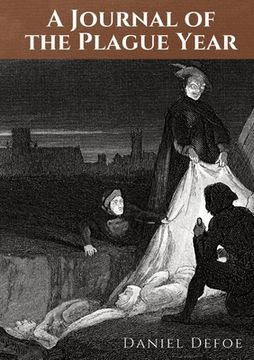
portada A Journal of the Plague Year: An account by Daniel Defoe of one man's experiences of the year 1665, in which the bubonic plague struck the city of L
Type
Physical Book
Language
English
Pages
174
Format
Paperback
Dimensions
21.0 x 14.8 x 0.9 cm
Weight
0.21 kg.
ISBN13
9782491251581

A Journal of the Plague Year: An account by Daniel Defoe of one man's experiences of the year 1665, in which the bubonic plague struck the city of L

Daniel Defoe (Author) · Les Prairies Numeriques · Paperback

A Journal of the Plague Year: An account by Daniel Defoe of one man's experiences of the year 1665, in which the bubonic plague struck the city of L - Daniel Defoe

New Book Imported to Netherlands *
Delivery: 12 May - 14 May Shipping: 5 to 6 business days.
20,99 €
* Import costs and 9% BTW included in the price ✅
20,99 €
Delivery to any Netherlands address between Tuesday, May 12 and Thursday, May 14

Synopsis "A Journal of the Plague Year: An account by Daniel Defoe of one man's experiences of the year 1665, in which the bubonic plague struck the city of L "

A Journal of the Plague Year is a book by Daniel Defoe, first published in March 1722. It is an account of one man's experiences of the year 1665, in which the bubonic plague struck the city of London in what became known as the Great Plague of London, the last epidemic of plague in that city. The book is told somewhat chronologically, though without sections or chapter headings, and with frequent digressions and repetitions.Presented as an eyewitness account of the events at the time, it was written in the years just prior to the book's first publication in March 1722. Defoe was only five years old in 1665 when the Great Plague took place, and the book itself was published under the initials H. F. and is probably based on the journals of Defoe's uncle, Henry Foe, who, like 'H. F.', was a saddler who lived in the Whitechapel district of East London.In the book, Defoe goes to great pains to achieve an effect of verisimilitude, identifying specific neighborhoods, streets, and even houses in which events took place. Additionally, it provides tables of casualty figures and discusses the credibility of various accounts and anecdotes received by the narrator. The book is often compared to the actual, contemporary accounts of the plague in the diary of Samuel Pepys. Defoe's account, which appears to include much research, is far more systematic and detailed than Pepys's first-person account.A Journal of the Plague Year is a book by Daniel Defoe, first published in March 1722. It is an account of one man's experiences of the year 1665, in which the bubonic plague struck the city of London in what became known as the Great Plague of London, the last epidemic of plague in that city. The book is told somewhat chronologically, though without sections or chapter headings, and with frequent digressions and repetitions.[1]Presented as an eyewitness account of the events at the time, it was written in the years just prior to the book's first publication in March 1722. Defoe was only five years old in 1665 when the Great Plague took place, and the book itself was published under the initials H. F. and is probably based on the journals of Defoe's uncle, Henry Foe, who, like 'H. F.', was a saddler who lived in the Whitechapel district of East London.In the book, Defoe goes to great pains to achieve an effect of verisimilitude, identifying specific neighborhoods, streets, and even houses in which events took place. Additionally, it provides tables of casualty figures and discusses the credibility of various accounts and anecdotes received by the narrator. The book is often compared to the actual, contemporary accounts of the plague in the diary of Samuel Pepys. Defoe's account, which appears to include much research, is far more systematic and detailed than Pepys's first-person account.
Daniel Defoe
  (Author)
View Author's Page
English writer and journalist, Daniel Defoe is mainly known for his novel Robinson Crusoe (1719), though he also stood out for his role in the development of the press and for his political and social essays

Defoe left his studies to become a discreet businessman, whose activities were not entirely profitable, even receiving prison time for his debts

From 1695, after several years of exile due to his political ideology, he starts a new business dedicated to tiles and bricks which begins to work, providing his family—he was married and had six children—with greater economic stability

However, his political activism leads him to publish several essays or pamphlets that cost him days of imprisonment and the pillory. After returning to jail, Defoe begins working from a magazine supporting political factions of the government, participating in the English secret services

In 1719 he publishes his great novel, Robinson Crusoe, which allows him to launch into a literary career marked by successes such as The Adventures of Captain Singleton, A Journal of the Plague Year, or Moll Flanders. His popularity grew and his influence on subsequent generations of writers by enhancing the novelistic genre is notable

Despite all his success and his connections with the government, Defoe never achieved stable economic solvency for long. His death in 1731 occurred while fleeing from new creditors
See more
See less

Customers reviews

Frequently Asked Questions about the Book

All books in our catalog are Original.
The book is written in English.
The binding of this edition is Paperback.

Questions and Answers about the Book

Do you have a question about the book? Login to be able to add your own question.

Opinions about Bookdelivery

More customer reviews