Hallo! Tracked shipping to Netherlands with Delivery Duty Paid for just €7 

Ship to
Netherlands
0
  • argentina
  • chile
  • colombia
  • españa
  • méxico
  • perú
  • estados unidos
  • internacional

Select your country

Americas

Europe

Rest of the world

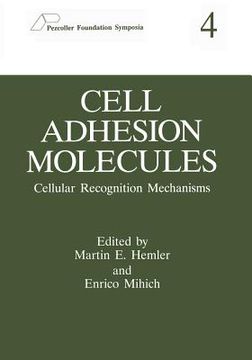
portada Cell Adhesion Molecules: Cellular Recognition Mechanisms
Type
Physical Book
Publisher
Language
English
Pages
294
Format
Paperback
Dimensions
25.4x17.8x1.7 cm
Weight
0.54 kg.
ISBN13
9781461362241

Cell Adhesion Molecules: Cellular Recognition Mechanisms

Hemler, Martin E. ; Mihich, Enrico (Author) · Springer · Paperback

Cell Adhesion Molecules: Cellular Recognition Mechanisms - Hemler, Martin E. ; Mihich, Enrico

Cheaper New Book Imported to Netherlands
Delivery: 29 Sep - 01 Oct Shipping: 15 to 16 business days.
€ 56,89
Faster New Book Imported to Netherlands
Delivery: 15 Sep - 17 Sep Shipping: 5 to 6 business days.
€ 69,15
Import costs and 9% BTW included in the price ✅
€ 56,89

Synopsis "Cell Adhesion Molecules: Cellular Recognition Mechanisms"

The Fourth Annual Pezcoller Symposium entitled Adhesion Molecules: Cellular Recognition Mechanisms was held in Rovereto, Italy, June 24-26, 1992 and was focussed on the detailed mechanisms whereby cells utilize certain integral membrane proteins to perceive their surrounding environment and interact with it. With timely presentations and stimulating discussions this Symposium addressed the genetics and biochemistry of adhesion molecules, the regulation of their functions and their role in cancer and the immune system. Emphasis was given to adhesion proteins in the integrin family because of the widespread distribution of this group of molecules and its important role in essentially all eukaryotic biological systems. The regulation of integrin genes and their expression are discussed in detail, as are specific aspects of the genetics of fibronectin. The molecular basis for the regulation of certain integrins, the function of these proteins in determining cell adhesion, and the consequences of this adhesion for the function of the cells involved are discussed. The role of certain integrins in stimulating signal transduction, the essential involvement of integrins in conditioning the function of T and NK cells function, the heterogeneity of integrins and its biological consequences, and the role of cell adhesion molecules in tumor cells invasion and metastases are all extensively analyzed. New information was presented on the role of CD44 and splice variants in normal differentiation and tumor progression.

Customers reviews

Frequently Asked Questions about the Book

All books in our catalog are Original.
The book is written in English.
The binding of this edition is Paperback.

Questions and Answers about the Book

Do you have a question about the book? Login to be able to add your own question.

Opinions about Bookdelivery

More customer reviews