Tracked shipping to the Netherlands for just €3.99. Prices include 9% BTW. 

Ship to
Netherlands
0
  • argentina
  • chile
  • colombia
  • españa
  • méxico
  • perú
  • estados unidos
  • internacional

Select your country

Americas

Europe

Rest of the world

portada Concerning the Spiritual-And the Concrete-In Kandinsky's art
Type
Physical Book
Year
2014
Language
English
Pages
280
Format
Paperback
Dimensions
25.3 x 18.2 x 1.6 cm
Weight
0.58 kg.
ISBN13
9780804784849
Edition No.
1

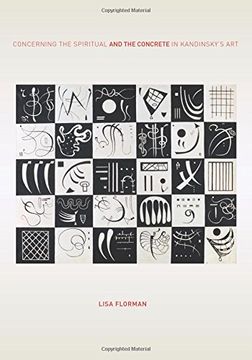
Concerning the Spiritual-And the Concrete-In Kandinsky's art

Lisa Florman (Author) · Stanford University Press · Paperback

Concerning the Spiritual-And the Concrete-In Kandinsky's art - Florman, Lisa

New Book Imported to Netherlands
Delivery: 14 Jul - 21 Jul Shipping: 13 to 17 business days.
38,25 €
Import costs and 9% BTW included in the price ✅
38,25 €

Synopsis "Concerning the Spiritual-And the Concrete-In Kandinsky's art "

This book examines the art and writings of Wassily Kandinsky, who is widely regarded as one of the first artists to produce non-representational paintings. Crucial to an understanding of Kandinsky's intentions is On the Spiritual in Art, the celebrated essay he published in 1911. Where most scholars have taken its repeated references to "spirit" as signaling quasi-religious or mystical concerns, Florman argues instead that Kandinsky's primary frame of reference was G.W.F. Hegel's Aesthetics, in which art had similarly been presented as a vehicle for the developing self-consciousness of spirit (or Geist, in German). In addition to close readings of Kandinsky's writings, the book also includes a discussion of a 1936 essay on the artist's paintings written by his own nephew, philosopher Alexandre Kojève, the foremost Hegel scholar in France at that time. It also provides detailed analyses of individual paintings by Kandinsky, demonstrating how the development of his oeuvre challenges Hegel's views on modern art, yet operates in much the same manner as does Hegel's philosophical system. Through the work of a single, crucial artist, Florman presents a radical new account of why painting turned to abstraction in the early years of the twentieth century.

Customers reviews

Frequently Asked Questions about the Book

All books in our catalog are Original.
The book is written in English.
The binding of this edition is Paperback.

Questions and Answers about the Book

Do you have a question about the book? Login to be able to add your own question.

Opinions about Bookdelivery

More customer reviews