Hallo! Tracked shipping to Netherlands with Delivery Duty Paid for just €7 

Ship to
Netherlands
0
  • argentina
  • chile
  • colombia
  • españa
  • méxico
  • perú
  • estados unidos
  • internacional

Select your country

Americas

Europe

Rest of the world

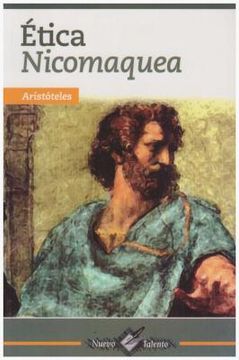
portada etica nicomaquea (in Spanish)
Type
Physical Book
Publisher
Topic
no ficcion - filosofia
Language
Spanish
Format
Paperback
Dimensions
20.3 x 13.5 x 1.3 cm
Weight
0.25 kg.
ISBN13
9789706271532
Edited in
México

etica nicomaquea (in Spanish)

Aristóteles (Author) · Epoca · Paperback

etica nicomaquea (in Spanish) - Aristóteles

New Book Imported to Netherlands
Delivery: 03 Sep - 11 Sep Shipping: 13 to 18 business days.
€ 17,76
Import costs and 9% BTW included in the price ✅
€ 17,76

Synopsis "etica nicomaquea (in Spanish)"

La ética de Aristóteles establece como punto de partida que el fin último de todo ser humano es la felicidad. Según Aristóteles, para llegar a la felicidad, se debe analizar la naturaleza humana. De esta manera se llega a la conclusión de que cada ser es feliz realizando la actividad que le es propia y natural. Es decir, el hombre es feliz siendo hombre y llevando a cabo actividades propias de los hombres.La forma más perfecta, y a su vez irrealizable, de alcanzar la felicidad es la actividad contemplativa. Sin embargo, este tipo de felicidad es propia de los dioses. El ser humano, debido a sus necesidades, ha de conformarse con una felicidad limitada, consistente en la posesión de bienes corporales y exteriores y que sin las virtudes morales no se podría conseguir.Dentro del ser humano, para Aristóteles, existen dos tipos de virtudes fundamentales. Las virtudes intelectuales, dedicadas a perfeccionar el conocimiento, y las virtudes morales que perfeccionan la forma de ser de cada persona. Entre las virtudes intelectuales se encuentra la prudencia, virtud de gran importancia para Aristóteles en la vida práctica.
Aristóteles
  (Author)
View Author's Page
Aristotle (Stagira, 384 BC-Chalcis, 322 BC) was a philosopher, polymath, and Greek scientist born in the city of Stagira, in the north of Ancient Greece. He is considered, along with Plato, the father of Western philosophy. His ideas have had a huge influence on the intellectual history of the West for more than two millennia.

He was a disciple of Plato and other thinkers, such as Eudoxus of Cnidus, during the twenty years he was at the Academy of Athens. Shortly after Plato's death, Aristotle left Athens to be the tutor of Alexander the Great in the Kingdom of Macedonia for almost 5 years. In the last stage of his life, he founded the Lyceum in Athens, where he taught until a year before his death.

Aristotle wrote about 200 works, of which only 31 have been preserved (none of them intended for publication) in the Corpus Aristotelicum on a wide variety of topics, including: logic, metaphysics, philosophy of science, ethics, political philosophy, aesthetics, rhetoric, physics, astronomy, and biology. Aristotle transformed many, if not all, of the areas of knowledge he addressed. He is recognized as the founding father of logic and biology, since although there are reflections and writings on both subjects before him, it is in Aristotle's work that the first systematic investigations are found. Aristotle has also been called the father of political science, zoology, embryology, natural law, scientific method, rhetoric, psychology, realism, criticism, individualism, teleology, and meteorology.
See more
See less

Customers reviews

Frequently Asked Questions about the Book

All books in our catalog are Original.
The book is written in Spanish.
The binding of this edition is Paperback.

Questions and Answers about the Book

Do you have a question about the book? Login to be able to add your own question.

Opinions about Bookdelivery

More customer reviews