Hallo! Tracked shipping to Netherlands with Delivery Duty Paid for just €7 

Ship to
Netherlands
0
  • argentina
  • chile
  • colombia
  • españa
  • méxico
  • perú
  • estados unidos
  • internacional

Select your country

Americas

Europe

Rest of the world

portada Explore Intel Edison
Type
Physical Book
Publisher
Language
English
Pages
202
Format
Paperback
Dimensions
23.5x19.1x1.1 cm
Weight
0.35 kg.
ISBN13
9781871962444

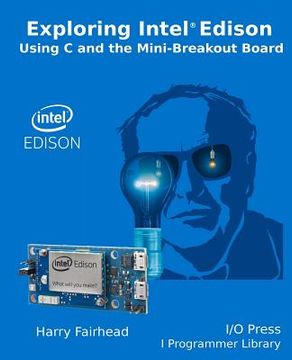
Explore Intel Edison

Harry Fairhead (Author) · I/O Press · Paperback

Explore Intel Edison - Fairhead, Harry

New Book Imported to Netherlands
Delivery: 01 Oct - 08 Oct Shipping: 17 to 21 business days.
€ 29,17
Import costs and 9% BTW included in the price ✅
€ 29,17

Synopsis "Explore Intel Edison "

The Intel(R) Edison is a remarkable device. It is as small as an embedded processor, but has enough power to allow it to be used as a tiny server. With its built-in support for WiFi, GPIO, I2C and SPI it is a capable IoT device. However, to make use of its unique qualities you have to take a step beyond its simple Arduino emulation and make use of it as itself, in its native mode. This means using the mini-breakout board and dealing with the fact that it is a 1.8V logic device and programming it using C to bring out its full power. Once you know how, this isn't as difficult as it seems at first. The rewards are well worth the effort. Exploring Intel(R) Edison starts with setting it up for the mini-breakout board. Then it looks at the advantages of choosing C as the language in which to program it, showing how to set up the Intel(R) System Studio IoT Edition IDE. Now we are ready to get building circuits and coding. Using the mraa library is the direct way to work with the GPIO lines and we need to master it before looking at ways of making things faster with memory-mapped I/O, achieving realtime facilities with Linux and using pulse width modulation. From here we are able to start connecting sensors - the HTU21D (I2C), DHT11/22 (custom) and the DS18B20 (1-wire). There are problems to overcome along the way - how to convert from 1.8V to work with higher voltages and how to support a 1-wire bus. The final circuit, to add AtoD, uses the SPI bus and implements a software emulation. Finally we look beyond mraa with a Linux-based approach to working with GPIO lines and how to set the GPIO mode.

Customers reviews

Frequently Asked Questions about the Book

All books in our catalog are Original.
The book is written in English.
The binding of this edition is Paperback.

Questions and Answers about the Book

Do you have a question about the book? Login to be able to add your own question.

Opinions about Bookdelivery

More customer reviews