Hallo! Tracked shipping to Netherlands with Delivery Duty Paid for just €7 

Ship to
Netherlands
0
  • argentina
  • chile
  • colombia
  • españa
  • méxico
  • perú
  • estados unidos
  • internacional

Select your country

Americas

Europe

Rest of the world

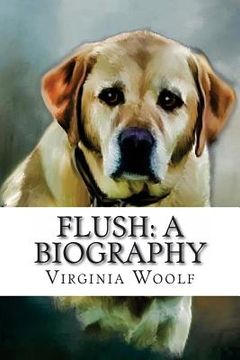
portada Flush: A Biography Virginia Woolf
Type
Physical Book
Illustrated by
Publisher
Year
2016
Language
English
Pages
68
Format
Paperback
Dimensions
22.9 x 15.2 x 0.4 cm
Weight
0.11 kg.
ISBN13
9781540495419

Flush: A Biography Virginia Woolf

Virginia Woolf (Author) · Paula Benitez (Illustrated by) · Createspace · Paperback

Flush: A Biography Virginia Woolf - Virginia Woolf

New Book Imported to Netherlands
Delivery: 09 Sep - 16 Sep Shipping: 17 to 21 business days.
€ 21,07
Import costs and 9% BTW included in the price ✅
€ 21,07

Synopsis "Flush: A Biography Virginia Woolf"

Flush: A Biography, an imaginative biography of Elizabeth Barrett Browning's cocker spaniel, is a cross-genre blend of fiction and nonfiction by Virginia Woolf published in 1933. Written after the completion of her emotionally draining The Waves, the work returned Woolf to the imaginative consideration of English history that she had begun in Orlando: A Biography, and to which she would return in Between the Acts. Commonly read as a modernist consideration of city life seen through the eyes of a dog, Flush serves as a harsh criticism of the supposedly unnatural ways of living in the city. The figure of Elizabeth Barrett Browning in the text is often read as an analogue for other female intellectuals, like Woolf herself, who suffered from illness, feigned or real, as a part of their status as female writers. Most insightful and experimental are Woolf's emotional and philosophical views verbalised in Flush's thoughts. As he spends more time with Barrett Browning, Flush becomes emotionally and spiritually connected to the poet and both begin to understand each other despite their language barriers. For Flush smell is poetry, but for Barrett Browning, poetry is impossible without words. In Flush Woolf examines the barriers that exist between woman and animal created by language yet overcome through symbolic actions. The book, due to its subject matter, has often been considered one of her less serious artistic endeavours, however she uses her distinctive stream of consciousness style to experiment with a non-human perspective. For material, Woolf drew primarily on Barrett Browning's two poems on the dog ("To Flush, My Dog" and "Flush or Faunus") and on the published correspondence of the poet and her husband, Robert Browning. From this material, Woolf creates a biography that works on three levels. It is overtly a biography of a dog's life. Since this dog is of interest primarily for its owner, the work is also an impressionistic biography of Elizabeth Barrett during the most dramatic years of her life. At this level, Flush mostly recapitulates the romantic legend of Barrett Browning's life: early confinement by a mysterious illness and a doting but tyrannical father; a passionate romance with an equally talented poet; an elopement that permanently estranges the father, but which allows Barrett Browning to find happiness and health in Italy. On a third level, the book gives Woolf an opportunity to return to some of her most frequent topics: the glory and misery of London; the Victorian mindset; class differences; and the ways in which women oppressed by "fathers and tyrants" may find freedom.
Virginia Woolf
  (Author)
View Author's Page
Virginia Woolf was born in London on January 25, 1882, and died on March 28, 1941, drowned in the River Ouse. After her father's death, the well-known man of letters Sir Leslie Stephen, Virginia and her sister Vanessa left the elegant Kensington neighborhood and moved to the bohemian Bloomsbury, which named the brilliant literary group formed around the Stephen sisters. Among its members were T. S. Eliot, Bertrand Russell, Vita Sackville-West, and the writer Leonard Woolf, whom Virginia married and with whom she ran the prestigious Hogarth Press. From her early works, Virginia Woolf highlighted her intention to take novels beyond mere narration. In Mrs. Dalloway (1925) and To the Lighthouse (1927), the author expressed the inner feelings of the characters with her own techniques, achieving great psychological effects through images, metaphors, and symbols. Her technique was consolidated with Orlando (1931) and The Waves (1931), which secured her an indisputable place within the finest world literature. Additionally, Woolf wrote essays as famous as A Room of One's Own (1929), which still inspires new generations of women today, literary criticism articles like those compiled in The Common Reader (1925, 1932) and in Genius and Ink (2021), or the biography of the English poet Elizabeth Barrett's dog, Flush (1933). All these works are published by Lumen.
See more
See less

Customers reviews

Frequently Asked Questions about the Book

All books in our catalog are Original.
The book is written in English.
The binding of this edition is Paperback.

Questions and Answers about the Book

Do you have a question about the book? Login to be able to add your own question.

Opinions about Bookdelivery

More customer reviews