Tracked shipping to the Netherlands for just € 7. Prices include 9% BTW and new EU € 3 customs duty. No hidden fees. 

Ship to
Netherlands
0
  • argentina
  • chile
  • colombia
  • españa
  • méxico
  • perú
  • estados unidos
  • internacional

Select your country

Americas

Europe

Rest of the world

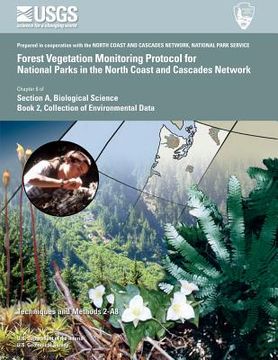
portada Forest Vegetation Monitoring Protocol for National Parks in the North Coast and Cascades Network
Type
Physical Book
Publisher
Language
English
Pages
234
Format
Paperback
Dimensions
27.9 x 21.6 x 1.2 cm
Weight
0.55 kg.
ISBN13
9781500562724

Forest Vegetation Monitoring Protocol for National Parks in the North Coast and Cascades Network

Karen M. Hutten (Author) · John R. Boetsch (Author) · Steven A. Acker (Author) · Createspace · Paperback

Forest Vegetation Monitoring Protocol for National Parks in the North Coast and Cascades Network - Hutten, Karen M. ; Boetsch, John R. ; Acker, Steven A.

New Book Imported to Netherlands
Delivery: 21 Aug - 28 Aug Shipping: 17 to 21 business days.
29,07 €
Import costs and 9% BTW included in the price ✅
29,07 €

Synopsis "Forest Vegetation Monitoring Protocol for National Parks in the North Coast and Cascades Network"

Plant communities are the foundation for terrestrial trophic webs and animal habitat, and their structure and species composition are an integrated result of biological and physical drivers (Gates, 1993). Additionally, they have a major role in geologic, geomorphologic and soil development processes (Jenny, 1941; Stevens and Walker, 1970). Throughout most of the Pacific Northwest, environmental conditions support coniferous forests as the dominant vegetation type. In the face of anthropogenic climate change, forests have a global role as potential sinks for atmospheric carbon (Goodale and others, 2002). Consequently, knowledge of the status of forests in the three large parks of the NCCN [that is, Mount Rainier (MORA), North Cascades (NOCA), and Olympic (OLYM) National Parks] is fundamental to understanding the condition of Pacific Northwest ecosystems. Diverse climate and soil properties across the Pacific Northwest result in a variety of forest types (Franklin and Dyrness, 1973; Franklin and others, 1988; Henderson and others, 1989, 1992). The mountainous terrain of Mount Rainier, North Cascades, and Olympic National Parks create steep elevational and precipitation gradients within and among the parks: collectively, these parks span from sea level to more than 4,200 m; and include areas with precipitation from 90 to more than 500 cm. The resulting forests range from coastal rainforests with dense understories and massive trees draped with epiphytes; to areas with drought-adapted Ponderosa pines; to high-elevation subalpine fir forests interspersed with meadows just below treeline (table 1). These forests, in turn, are the foundation for other biotic communities constituting Pacific Northwest ecosystems.

Customers reviews

Frequently Asked Questions about the Book

All books in our catalog are Original.
The book is written in English.
The binding of this edition is Paperback.

Questions and Answers about the Book

Do you have a question about the book? Login to be able to add your own question.

Opinions about Bookdelivery

More customer reviews