Hallo! Tracked shipping to the Netherlands for just € 7. Prices include 9% BTW and new EU € 3 customs duty. No hidden fees. 

Ship to
Netherlands
0
  • argentina
  • chile
  • colombia
  • españa
  • méxico
  • perú
  • estados unidos
  • internacional

Select your country

Americas

Europe

Rest of the world

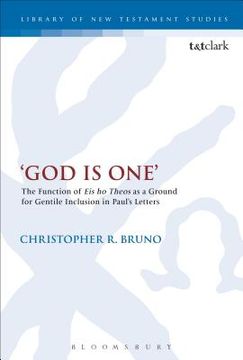
portada God is One': The Function of 'Eis ho Theos' as a Ground for Gentile Inclusion in Paul's Letters
Type
Physical Book
Publisher
Language
English
Pages
264
Format
Hardcover
Dimensions
23.6 x 15.5 x 2.5 cm
Weight
0.57 kg.
ISBN13
9780567153135

God is One': The Function of 'Eis ho Theos' as a Ground for Gentile Inclusion in Paul's Letters

Christopher R. Bruno (Author) · T&T Clark · Hardcover

God is One': The Function of 'Eis ho Theos' as a Ground for Gentile Inclusion in Paul's Letters - Bruno, Christopher R.

New Book Imported to Netherlands
Delivery: 10 Aug - 12 Aug Shipping: 5 to 6 business days.
208,04 €
Import costs and 9% BTW included in the price ✅
208,04 €

Synopsis "God is One': The Function of 'Eis ho Theos' as a Ground for Gentile Inclusion in Paul's Letters"

In discussions of Paul's letters, much attention has been devoted to statements that closely identify Christ with Israel's God (i.e., 1 Cor 8:6). However, in Rom 3:30 and Gal 3:20, Paul uses the phrase "God is one" to link Israel's monotheistic confession and the inclusion of the Gentiles in the people of God. Therefore, this study traces the OT and early Jewish backgrounds of the phrase "God is one" and their possible links to Gentile inclusion. Following this, Christopher Bruno examines the two key Pauline texts that link the confession of God as one with the inclusion of the Gentiles. Bruno observes a significant discontinuity between the consistent OT and Jewish interpretations of the phrase and Paul's use of "God is one" in relation to the Gentiles. In the both the OT and earlyJewish literature, the phrase functions as a boundary marker of sorts, distinguishing the covenant people and the Gentiles. The key exception to this pattern is Zech 14:9, which anticipates the confession of God as one expanding to the nations. Similarly, in Romans and Galatians, the phrase is not aboundary marker, but rather grounds the unity of Jew and Gentile. The contextand arguments in Rom 3:30 and Gal 3:20 lead to the conclusion that Paul's monotheism must now be understood in light of the Christ event; moreover, Zech14:9 may play a significant role in the link between Paul's eschatological monotheism and his argument for the inclusion of the Gentiles in Romans and Galatians.

Customers reviews

Frequently Asked Questions about the Book

All books in our catalog are Original.
The book is written in English.
The binding of this edition is Hardcover.

Questions and Answers about the Book

Do you have a question about the book? Login to be able to add your own question.

Opinions about Bookdelivery

More customer reviews