Ship to
Netherlands
0
  • argentina
  • chile
  • colombia
  • españa
  • méxico
  • perú
  • estados unidos
  • internacional

Select your country

Americas

Europe

Rest of the world

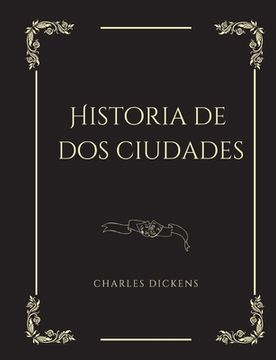
portada Historia de dos ciudades: Une Novela histórica (in Spanish)
Type
Physical Book
Language
Spanish
Pages
268
Format
Paperback
Dimensions
24.6 x 18.9 x 1.4 cm
Weight
0.49 kg.
ISBN13
9782322419975

Historia de dos ciudades: Une Novela histórica (in Spanish)

Charles Dickens (Author) · Books on Demand · Paperback

Historia de dos ciudades: Une Novela histórica (in Spanish) - Charles Dickens

Cheaper New Book Imported to Netherlands
Delivery: 18 Aug - 20 Aug Shipping: 13 to 14 business days.
24,51 €
Faster New Book Imported to Netherlands
Delivery: 05 Aug - 07 Aug Shipping: 4 to 5 business days.
33,82 €
Import costs and 9% BTW included in the price ✅
24,51 €

Synopsis "Historia de dos ciudades: Une Novela histórica (in Spanish)"

Un clásico indispensable inspirado en la Revolución Francesa. Dickens nos ofrece un panorama de personajes cuyas humildes vidas se ven trastornadas por el estallido de un terrible suceso histórico. La historia transcurre entre Londres y París durante la época de la Revolución Francesa; una revolución que se presenta como un justo castigo a la aristocracia por los siglos de explotación y maltrato del pueblo. Esta novela es un clásico de la literatura inglesa del siglo XIX. Trata paralelamente las realidades de Inglaterra y de una Francia revolucionaria. Tomando como punto de referencia la revolución francesa, Dickens muestra los problemas sociales y políticos de Inglaterra, temiendo que la historia se repitiera en su país natal cuando el escribía esta novela. En el contraste de estas dos ciudades presentadas, Inglaterra se presenta como la confianza, la tranquilidad, el futuro asegurado, mientras Francia se convierte más y más peligrosa a medida que avanza la novela. Los actos de violencia realizados por el pueblo francés, están dentro de las escenas más memorables del libro. Dickens rechaza la violencia revolucionaria en sus dos formas, tanto es su forma popular, por las masas, como en su forma institucionalizada como es el terror. Dickens escribió un libro sobre dos ciudades, una que entendía y conocía y la otra que no entendía ni conocía. Su descripción sobre la que no conocía es casi mejor que la que sí conocía. Los críticos sostienen que Dickens basó su novela sobre la obra de Carlyle sobre la revolución francesa, pero se podría decir que Historia de dos ciudades es la novela del libro histórico de Carlyle, es decir es la historia pero con el sentimiento agregado, es el relato que te atrapa y te sumerge en los hechos revolucionarios de Francia en el siglo XVIII.
Charles Dickens
  (Author)
View Author's Page
Charles Dickens (February 7, 1812 - June 9, 1870) was born in Portsmouth and was the eldest son of a Royal Navy clerk. At twelve, his father's imprisonment for debt forced him to work in a blacking factory. His education was sporadic: he taught himself shorthand, worked as a clerk in a law office, and eventually became a parliamentary correspondent for the Morning Chronicle.

Coming from a humble family, "good old Charles" did not receive formal education until he was nine, and was heavily criticized by the critics of the time for being too self-taught. His life took an unexpected turn with his father's imprisonment for debts, moving his family to live with him in jail, allowed at that time by British laws. At the age of 12, he was already considered fit to start working in a dye factory. Although his family's situation had improved, his mother insisted he keep working there, inspiring him to write one of his masterpieces, David Copperfield.

His articles, later collected in Scenes from London Life by "Boz" (1836-1837), were very successful, and with the appearance in 1837 of The Posthumous Papers of the Pickwick Club, Dickens became a true publishing phenomenon. Novels such as Oliver Twist (1837-1839), Nicholas Nickleby (1838-1839), and Barnaby Rudge (1841) gained enormous popularity, as did some travel chronicles, such as Pictures from Italy (1846). With Dombey and Son (1846-1848) he began his mature period, of which good examples are David Copperfield (1849-1850), his first novel in the first person and his favorite, in which he developed some autobiographical episodes; Bleak House (1852-1853); Little Dorrit (1855-1857), A Tale of Two Cities (1859), Great Expectations (1860-1861), and Our Mutual Friend (1864-1865). He died at Gad's Hill, his country house in Higham, in the county of Kent.
See more
See less

Customers reviews

Frequently Asked Questions about the Book

All books in our catalog are Original.
The book is written in Spanish.
The binding of this edition is Paperback.

Questions and Answers about the Book

Do you have a question about the book? Login to be able to add your own question.

Opinions about Bookdelivery

More customer reviews