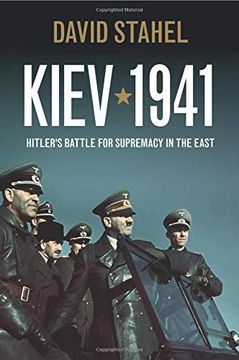
In just four weeks in the summer of 1941 the German Wehrmacht wrought unprecedented destruction on four Soviet armies, conquering central Ukraine and killing or capturing three quarters of a million men. This was the Battle of Kiev - one of the largest and most decisive battles of World War II and, for Hitler and Stalin, a battle of crucial importance. For the first time, David Stahel charts the battle's dramatic course and aftermath, uncovering the irreplaceable losses suffered by Germany's 'panzer groups' despite their battlefield gains, and the implications of these losses for the German war effort. He illuminates the inner workings of the German army as well as the experiences of ordinary soldiers, showing that with the Russian winter looming and Soviet resistance still unbroken, victory came at huge cost and confirmed the turning point in Germany's war in the East.
David Stahel es un historiador militar australiano especializado en la Segunda Guerra Mundial, particularmente en el Frente Oriental y las campañas desarrolladas entre la Alemania nazi y la Unión Soviética. Profesor e investigador universitario, ha dedicado gran parte de su carrera a revisar interpretaciones tradicionales sobre la Operación Barbarroja y el desempeño estratégico del ejército alemán. Su obra La guerra nazi-soviética forma parte de una amplia producción académica centrada en analizar los factores militares, logísticos y políticos que determinaron el curso del conflicto más grande y devastador del siglo XX.
El trabajo de Stahel se distingue por el uso exhaustivo de fuentes documentales y por cuestionar la idea de una supuesta inevitabilidad de las victorias iniciales alemanas. Sus investigaciones han contribuido a una comprensión más matizada de las limitaciones operativas del Tercer Reich y del papel decisivo desempeñado por la resistencia soviética. Además de sus libros sobre Barbarroja, Kiev, Moscú y Stalingrado, es reconocido por acercar debates historiográficos complejos a un público más amplio sin sacrificar rigor académico. Su obra se ha convertido en una referencia habitual para estudiosos y lectores interesados en la historia militar contemporánea.