Hallo! Tracked shipping to Netherlands with Delivery Duty Paid for just €7 

Ship to
Netherlands
0
  • argentina
  • chile
  • colombia
  • españa
  • méxico
  • perú
  • estados unidos
  • internacional

Select your country

Americas

Europe

Rest of the world

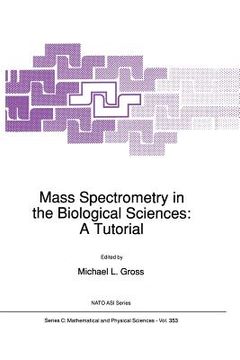
portada Mass Spectrometry in the Biological Sciences: A Tutorial
Type
Physical Book
Publisher
Language
English
Pages
461
Format
Paperback
Dimensions
23.4 x 15.6 x 2.5 cm
Weight
0.67 kg.
ISBN13
9789401051576

Mass Spectrometry in the Biological Sciences: A Tutorial

Gross, M. L. (Author) · Springer · Paperback

Mass Spectrometry in the Biological Sciences: A Tutorial - Gross, M. L.

Cheaper New Book Imported to Netherlands
Delivery: 08 Sep - 15 Sep Shipping: 13 to 17 business days.
€ 187,65
Faster New Book Imported to Netherlands
Delivery: 26 Aug - 28 Aug Shipping: 5 to 6 business days.
€ 265,13
Import costs and 9% BTW included in the price ✅
€ 187,65

Synopsis "Mass Spectrometry in the Biological Sciences: A Tutorial"

The developments in mass spectrometry over the past fifteen years have been impressive in their implications in bioanalytical chemistry. The achievements begin with the inventions of Cf-252 Plasma Desorption Mass Spectrometry by Macfarlane and Fourier Transform Mass Spectrometry by Comisarow and Marshall in the mid 1970s. The former showed the feasibility of producing large gas-phase ions from large biomolecules whereas the latter enhanced the capabilities for ion trapping especially in analytical mass spectrometry. A major achievement was the development by Barber of Fast Atom Bombardment (FAB) mass spectrometry, an advance that heralded a new era in biological mass spectrometry. Contemporary and routine instruments such as magnetic sectors and quadrupoles were rapidly adapted to F AB, and nearly the entire universe of small molecules became amenable to study by mass spectrometry. The introduction of FAB also paved the way for improvement of instrument capability. For example, the upper mass limit of magnet sector mass spectrometers was increased by nearly an order of magnitude by the instrument manufacturers. Furthermore, the technique of tandem mass spectrometry (MS/MS) was given new meaning because important structural information for biomolecules could now be produced for ions introduced by FAB into the tandem instrument. The evolution of MS/MS continues today with the development of ion traps, time-of-flight, and sector instruments equipped with array detection.

Customers reviews

Frequently Asked Questions about the Book

All books in our catalog are Original.
The book is written in English.
The binding of this edition is Paperback.

Questions and Answers about the Book

Do you have a question about the book? Login to be able to add your own question.

Opinions about Bookdelivery

More customer reviews