Hallo! Tracked shipping to Netherlands with Delivery Duty Paid for just €7 

Ship to
Netherlands
0
  • argentina
  • chile
  • colombia
  • españa
  • méxico
  • perú
  • estados unidos
  • internacional

Select your country

Americas

Europe

Rest of the world

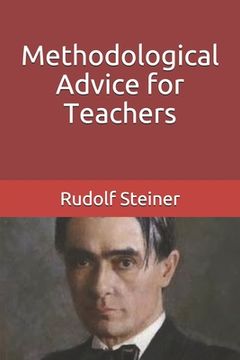
portada Methodological Advice for Teachers
Type
Physical Book
Language
English
Pages
176
Format
Paperback
Dimensions
22.9 x 15.2 x 1.0 cm
Weight
0.27 kg.
ISBN13
9781980606420

Methodological Advice for Teachers

Rudolf Steiner (Author) · Frederick Amrine (Translated by) · Johanna Collis (Translated by) · Independently Published · Paperback

Methodological Advice for Teachers - Amrine, Frederick ; Collis, Johanna ; Steiner, Rudolf

New Book Imported to Netherlands
Delivery: 09 Sep - 16 Sep Shipping: 16 to 20 business days.
€ 19,75
Import costs and 9% BTW included in the price ✅
€ 19,75

Synopsis "Methodological Advice for Teachers"

This is the second of three seminars given by Rudolf Steiner to the founding teachers of the Stuttgart Waldorf School in 1919, which makes it one of the most fundamental cycles on Waldorf Education. It contains a feast of methodological advice, everything from a remarkably innovative way of teaching reading to history, geography, and mathematics. Above all, wonder is to suffuse the entire curriculum, and everything human is to be viewed holistically. Steiner ends on a resounding chord, sounding four shining principles that are to guide teachers at all times.
Rudolf Steiner
  (Author)
View Author's Page
Rudolf Steiner (Donji Kraljevec, Austro-Hungarian Empire, now Croatia, February 25 or 27, 1861-Dornach, Switzerland, March 30, 1925) was an Austrian philosopher, literary scholar, educator, artist, playwright, social thinker, and occultist. He was the founder of anthroposophy, Waldorf education, biodynamic agriculture, anthroposophic medicine, and the new artistic form of eurythmy.

He described anthroposophy as follows: Anthroposophy is a path of knowledge that would like to lead the spiritual in man to the spiritual in the universe. Those who feel certain questions about the essence of man and the world as a vital necessity as the one felt when we are hungry and thirsty can be anthroposophists.

Steiner proposed a form of ethical individualism, to which he later added a more explicitly spiritual component. He derived his epistemology from the worldview of Johann Wolfgang Goethe, according to which thought is an organ of perception just like the eye or the ear. Just as the eye perceives colors and the ear sounds, so thought perceives ideas.
See more
See less

Customers reviews

Frequently Asked Questions about the Book

All books in our catalog are Original.
The book is written in English.
The binding of this edition is Paperback.

Questions and Answers about the Book

Do you have a question about the book? Login to be able to add your own question.

Opinions about Bookdelivery

More customer reviews