Hallo! Tracked shipping to Netherlands with Delivery Duty Paid for just €7 

Ship to
Netherlands
0
  • argentina
  • chile
  • colombia
  • españa
  • méxico
  • perú
  • estados unidos
  • internacional

Select your country

Americas

Europe

Rest of the world

portada modelling oceanic climate interactions
Type
Physical Book
Publisher
Year
2011
Language
English
Pages
472
Format
Paperback
Dimensions
23.4 x 15.6 x 2.5 cm
Weight
0.68 kg.
ISBN
3642849776
ISBN13
9783642849770

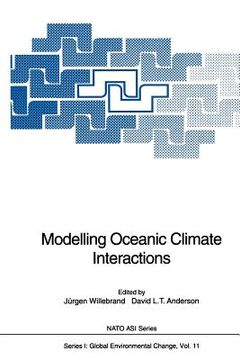
modelling oceanic climate interactions

David L. T. Anderson (Illustrated by) · Jürgen Willebrand (Illustrated by) · Springer · Paperback

modelling oceanic climate interactions - Willebrand, Jürgen ; Anderson, David L. T.

Cheaper New Book Imported to Netherlands
Delivery: 02 Sep - 09 Sep Shipping: 12 to 16 business days.
€ 101,60
Faster New Book Imported to Netherlands
Delivery: 20 Aug - 24 Aug Shipping: 4 to 5 business days.
€ 134,46
Import costs and 9% BTW included in the price ✅
€ 101,60

Synopsis "modelling oceanic climate interactions"

The ocean plays a central role in determining the climate of the earth. The oceanic circulation largely controls the temporal evolution of cli- mate changes resulting from human activities such as the increase of greenhouse gases in the atmosphere, and also affects the magnitude and regional distribution of those changes. On interannual and longer time scales the ocean is, through its interaction with the atmosphere, a source of important natural climate variations which we are only now beginning to recognise but whose cause has yet to be properly determined. Chem- ical and biological processes in the ocean are linked to climate change, particularly through interaction with the global carbon cycle. A quantitative understanding of the oceanic role in the climate system requires models which include many complex processes and interactions, and which are systematically verified with observations. This is the ob- jective of global research programs such as TOGA, WOCE, and JGOFS. Coupled numerical models of the oceanic and atmospheric circulation constitute the basis of every climate simulation. Increasingly it is recog- nized that in addition a biological/chemical component is necessary to capture the pathways of carbon and other trace gases. The development of such coupled models is a challenging task which needs scientists who must be cognizant of several other disciplines beyond their own specialty.

Customers reviews

Frequently Asked Questions about the Book

All books in our catalog are Original.
The book is written in English.
The binding of this edition is Paperback.

Questions and Answers about the Book

Do you have a question about the book? Login to be able to add your own question.

Opinions about Bookdelivery

More customer reviews