Hallo! Tracked shipping to Netherlands with Delivery Duty Paid for just €7 

Ship to
Netherlands
0
  • argentina
  • chile
  • colombia
  • españa
  • méxico
  • perú
  • estados unidos
  • internacional

Select your country

Americas

Europe

Rest of the world

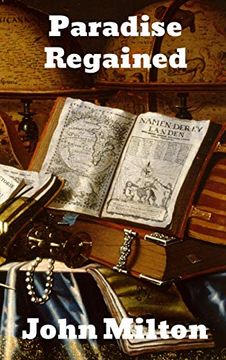
portada Paradise Regained
Type
Physical Book
Publisher
Year
2020
Language
English
Pages
126
Format
Hardcover
Dimensions
22.9x15.2x1 cm
Weight
0.34 kg.
ISBN13
9781774413647

Paradise Regained

John Milton (Author) · Binker North · Hardcover

Paradise Regained - John Milton

New Book Imported to Netherlands
Delivery: 15 Sep - 17 Sep Shipping: 5 to 6 business days.
€ 28,48
Import costs and 9% BTW included in the price ✅
€ 28,48

Synopsis "Paradise Regained "

Milton composed Paradise Regained at his cottage in Chalfont St Giles in Buckinghamshire. Paradise Regained is four books long and comprises 2,065 lines; in contrast, Paradise Lost is twelve books long and comprises 10,565 lines. As such, Barbara K. Lewalski has labelled the work a "brief epic".Whereas Paradise Lost is ornate in style and decorative in its verse, Paradise Regained is carried out in a fairly plain style. Specifically, Milton reduces his use of simile and deploys a simpler syntax in Paradise Regained than he does in Paradise Lost, and this is consistent with Jesus's sublime plainness in his life and teachings (in the epic, he prefers Hebrew psalms to Greek poetry). Modern editors believe the stylistics of Paradise Regained evince Milton's poetic maturity. No longer is the poet out to dazzle his readers with bombastic verse and lengthy epic similes. This is not to say that the poem bears no affinities with Milton's earlier work, but scholars continue to agree with Northrop Frye's suggestion that Paradise Regained is "practically sui generis" in its poetic execution.One major concept emphasized throughout Paradise Regained is the idea of reversals. As implied by its title, Milton sets out to reverse the "loss" of Paradise. Thus, antonyms are often found next to each other, reinforcing the idea that everything that was lost in the first epic will be regained by the end of this "brief epic". Additionally, the work focuses on the idea of "hunger", both in a literal and in a spiritual sense. After wandering in the wilderness for forty days, Jesus is starving for food. Satan, too blind to see any non-literal meanings of the term, offers Christ food and various other temptations, but Jesus continually denies him. Although Milton's Jesus is remarkably human, an exclusive focus on this dimension of his character obscures the divine stakes of Jesus's confrontation with Satan; Jesus emerges victorious, and Satan falls, amazed.An interesting anecdote recounted by a Quaker named Thomas Ellwood provides some insight into Paradise Regained's development. After studying Latin with Milton and reading the poet's epic Paradise Lost, Ellwood remarked, "Thou hast said much here of Paradise lost, but what hast thou to say of Paradise found?" Hearing this, Milton at first "sat some time in a muse" before changing the subject; however, sometime thereafter he showed to Ellwood a new manuscript entitled Paradise Regained. Some maintain that although he seemed to express gratitude to Ellwood in a letter, Milton in truth "passed on a friendly if impish fabrication" that made Ellwood feel like the inspiration for the poem.
John Milton
  (Author)
View Author's Page
John Milton (Londres, 1608-1674) fue un eminente poeta, ensayista y funcionario público inglés, considerado una de las figuras más influyentes de la literatura occidental. Ferviente defensor de la causa puritana, apoyó la Mancomunidad de Inglaterra bajo Oliver Cromwell, sirviendo como secretario de lenguas extranjeras. Su obra cumbre, la epopeya El paraíso perdido (1667), fue compuesta en verso blanco tras quedar ciego, narrando la caída de Adán y Eva.

Nacido en una familia culta, Milton recibió una sólida formación clásica que reflejó en sus primeras obras como L'Allegro y Il Penseroso. Políticamente activo durante la guerra civil inglesa, escribió tratados radicales, destacando Areopagitica (1644) en defensa de la libertad de prensa. Sus escritos políticos influyeron en el pensamiento republicano.

Además de su obra maestra, escribió El paraíso recobrado y Sansón Agonistas. Su vida estuvo marcada por la agitación política, tres matrimonios y una ceguera progresiva que no detuvo su labor creativa. Falleció en 1674, consolidado como un autor de inmensa maestría literaria, a menudo comparado con Shakespeare.
See more
See less

Customers reviews

Frequently Asked Questions about the Book

All books in our catalog are Original.
The book is written in English.
The binding of this edition is Hardcover.

Questions and Answers about the Book

Do you have a question about the book? Login to be able to add your own question.

Opinions about Bookdelivery

More customer reviews