Tracked shipping to the Netherlands for just € 7. Prices include 9% BTW and new EU € 3 customs duty. No hidden fees. 

Ship to
Netherlands
0
  • argentina
  • chile
  • colombia
  • españa
  • méxico
  • perú
  • estados unidos
  • internacional

Select your country

Americas

Europe

Rest of the world

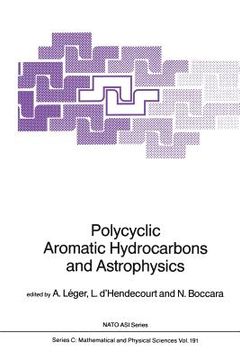
portada Polycyclic Aromatic Hydrocarbons and Astrophysics
Type
Physical Book
Publisher
Language
English
Pages
402
Format
Paperback
Dimensions
23.4 x 15.6 x 2.2 cm
Weight
0.59 kg.
ISBN13
9789401086196

Polycyclic Aromatic Hydrocarbons and Astrophysics

Léger, A. ; D'hendecourt, L. ; Boccara, N. (Author) · Springer · Paperback

Polycyclic Aromatic Hydrocarbons and Astrophysics - Léger, A. ; D'Hendecourt, L. ; Boccara, N.

Cheaper New Book Imported to Netherlands
Delivery: 07 Aug - 14 Aug Shipping: 13 to 17 business days.
189,53 €
Faster New Book Imported to Netherlands
Delivery: 28 Jul - 30 Jul Shipping: 5 to 6 business days.
266,74 €
Import costs and 9% BTW included in the price ✅
189,53 €

Synopsis "Polycyclic Aromatic Hydrocarbons and Astrophysics"

The near Infra-Red emission of the Interstellar Medium is a very puzzling subject. In the brightest regions, where spectroscopic observa- tions are possible from the ground, several bands (3.3 - 3.4 - 6.2 - 7.7 - 8.6 - 11.3 m) have been observed since 1973. The absence of satisfying explanation was so obvious that they were called "Unidenti- fied IR Emission Bands". The puzzle still increased when were known the first results of the general IR sky survey made by the satellite IRAS. On a large scale, the near IR emission of the Interstellar medium was expected to be very small but it was observed to be about one third of the total IR emission for our own galaxy ..- The situation has moved in 1984 when it was suggested that a class of stable organic molecules, the Polycyclic Aromatic Hydrocarbons (PAH's) could be at the origin of this near IR emission. Initially based on the required refractory character of particules that should be heated to high temperature without subliming, this hypothesis leads to a sugges- tive spectroscopic similarity with the observed astronomical bands. This hypothesis is attractive and it has many implications, for ins- tance, the PAHs would be the most abundant organic molecules in the universe. However, many points have to be clarified and the different consequences of this suggestion should be explored.

Customers reviews

Frequently Asked Questions about the Book

All books in our catalog are Original.
The book is written in English.
The binding of this edition is Paperback.

Questions and Answers about the Book

Do you have a question about the book? Login to be able to add your own question.

Opinions about Bookdelivery

More customer reviews