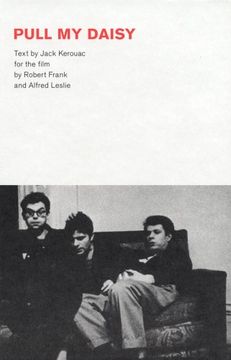
Pull My Daisy is a 1959 short film that typifies the Beat Generation. Directed by Robert Frank and Alfred Leslie, Daisy was adapted by Jack Kerouac from the third act of a stage play he never finished titled Beat Generation. Kerouac also provided improvised narration. It starred Allen Ginsberg, Gregory Corso, Larry Rivers, Peter Orlovsky, David Amram, Richard Bellamy, Alice Neel, Sally Gross and Pablo Frank, Robert Frank’s then-infant son. Based on an incident in the life of Neal Cassady and his wife Carolyn, Daisy tells the story of a railway brakeman whose painter wife invites a respectable bishop over for dinner. However, the brakeman’s bohemian friends crash the party, with comic results. The title Pull My Daisy was taken from the poem of the same name written by Kerouac, Ginsberg and Neal Cassidy over the 1940s and 1950s. The poem features in the film as the lyric within the jazz composition at the film’s opening. The Beat philosophy emphasized spontaneity, and the film conveyed the quality of having been thrown together or even improvised. Pull My Daisy was accordingly praised for years as an improvisational masterpiece, until Leslie revealed in a 1968 article in the Village Voice that the film was actually carefully planned, rehearsed, and directed by him and Frank, who shot the film on a professionally lit studio set. This book interweaves a transcript of Kerouac’s narration from the film with film stills and also includes an introduction by Jerry Tallmer written in 1961.
Jack Kerouac (1922-1969), an emblematic figure of the Beat Generation, captured the spirit of the era in his novels. Notable works include “On the Road” (1957), a key work on travel and freedom, “The Dharma Bums” (1958), inspired by Buddhism, and “The Subterraneans” (1958), about bohemian life. Kerouac, also a poet, is recognized for his spontaneous prose.
Robert Frank fue un fotógrafo y cineasta suizo-estadounidense considerado una de las figuras más influyentes de la fotografía documental del siglo XX. Nacido en Zúrich en 1924, emigró a Estados Unidos después de la Segunda Guerra Mundial y desarrolló una mirada profundamente personal sobre la sociedad norteamericana. Su trabajo rompió con la fotografía documental clásica mediante imágenes espontáneas, encuadres imperfectos y una sensibilidad melancólica que capturaba desigualdad, soledad y contradicciones culturales. Frank observaba Estados Unidos como alguien fascinado y desconcertado al mismo tiempo, algo que terminó convirtiendo sus fotografías en un retrato mucho más honesto que cómodo. Digamos que no vino a fotografiar postales turísticas precisamente.
Su obra más célebre es The Americans, publicada originalmente en 1958, un fotolibro revolucionario compuesto por imágenes tomadas durante viajes por distintos estados norteamericanos gracias a una beca Guggenheim. El libro, inicialmente criticado por mostrar una visión áspera y poco idealizada del país, terminó transformándose en una referencia absoluta para generaciones de fotógrafos y artistas visuales. Frank también dirigió películas experimentales y documentales, explorando temas relacionados con identidad, memoria y contracultura, siempre desde una estética libre y profundamente autobiográfica.