Hallo! Tracked shipping to Netherlands with Delivery Duty Paid for just €7 

Ship to
Netherlands
0
  • argentina
  • chile
  • colombia
  • españa
  • méxico
  • perú
  • estados unidos
  • internacional

Select your country

Americas

Europe

Rest of the world

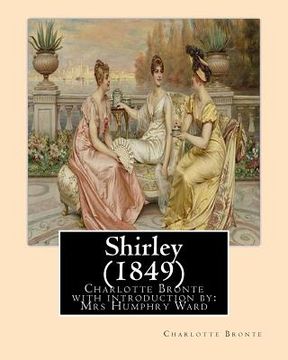
portada Shirley (1849), by Charlotte Bronte with introduction by Mrs Humphry Ward: Mrs Humphry Ward(11 June 1851 - 24 March 1920)
Type
Physical Book
Publisher
Language
English
Pages
362
Format
Paperback
Dimensions
25.4 x 20.3 x 1.9 cm
Weight
0.72 kg.
ISBN13
9781533008930

Shirley (1849), by Charlotte Bronte with introduction by Mrs Humphry Ward: Mrs Humphry Ward(11 June 1851 - 24 March 1920)

Charlotte Bronte (Author) · Mrs Humphry Ward (Author) · Createspace · Paperback

Shirley (1849), by Charlotte Bronte with introduction by Mrs Humphry Ward: Mrs Humphry Ward(11 June 1851 - 24 March 1920) - Ward, Mrs Humphry ; Bronte, Charlotte

New Book Imported to Netherlands
Delivery: 01 Sep - 08 Sep Shipping: 16 to 20 business days.
€ 25,73
Import costs and 9% BTW included in the price ✅
€ 25,73

Synopsis "Shirley (1849), by Charlotte Bronte with introduction by Mrs Humphry Ward: Mrs Humphry Ward(11 June 1851 - 24 March 1920)"

Shirley is an 1849 social novel(illustrated) by the English novelist Charlotte Brontë. It was Brontë's second published novel after Jane Eyre (originally published under Brontë's pseudonym Currer Bell). The novel is set in Yorkshire in the period 1811-12, during the industrial depression resulting from the Napoleonic Wars and the War of 1812. The novel is set against a backdrop of the Luddite uprisings in the Yorkshire textile industry. The novel's popularity led to Shirley's becoming a woman's name. The title character was given the name that her father had intended to give a son. Before the publication of the novel, Shirley was an uncommon - but distinctly male - name and would have been an unusual name for a woman.Today it is regarded as a distinctly female name and an uncommon male name.Robert Moore is a mill owner noted for apparent ruthlessness toward his employees - more than any other mill owner in town. He has laid off many of them, apparently indifferent to their resulting poverty. But in fact he has no choice, since the mill is deep in debt. The mill was inefficiently run by his late father and is already mortgaged. As the novel opens, Robert awaits delivery of new labour-saving machinery to the mill. The new machinery will let him lay off additional employees. Robert, with some friends, watches all night, but the machinery is destroyed on the way by angry millworkers. Robert's business difficulties continue, due in part to the continuing labour unrest, but even more so to the Napoleonic Wars and the accompanying Orders in Council which forbid British merchants from trading in American markets. Robert is very close to Caroline Helstone, who comes to his house to learn French from his sister, Hortense. Caroline worships Robert and he likes her too. Caroline's father is dead and her mother had abandoned her, leaving her to be brought up by her uncle, the local parson, Rev. Helstone. Caroline is penniless, and to keep himself from falling in love with her, Robert keeps his distance from her, since he cannot afford to marry for pleasure or love. He has to marry for money if he is to get his mill going again. Caroline realizes that Robert is growing increasingly distant and withdraws into herself. Her uncle does not sympathise with her 'fancies', and she has no money of her own, so she cannot leave the place, which is what she longs to do. She suggests taking up the job of a governess but her uncle dismisses it and assures her that she need not work. Caroline cheers up a great deal, however, when she meets Shirley. Shirley is a landowner, an independent heiress whose parents are dead and who lives with Mrs. Pryor, an old governess. Shirley is lively, cheerful, full of ideas about how to use her money and how to help people, and very interested in business concerns. Caroline and Shirley soon become very close friends. They both dislike social hypocrisy and wish they could do something significant with their lives. As Caroline gets closer to Shirley, she notices that Shirley and Robert get along very well, which makes her think that they would end up marrying each other. Shirley likes Robert, is very interested in his work, and is concerned about him and the threats he gets from laid-off millworkers. Both good and bad former employees are depicted. Some passages show the real suffering of those who were honest workers and can no longer find good employment; other passages show how some people use losing their jobs as an excuse to get drunk, fight with their previous employers, and incite other people to violence. Shirley uses her money to help the poorest of the lot, but she is also motivated by the desire to prevent any attack on Robert, a motive that makes Caroline both happy and unhappy...Mary Augusta Ward was a British novelist who wrote under her married name as Mrs Humphry Ward (11 June 1851 - 24 March 1920)
Charlotte Bronte
  (Author)
View Author's Page
(Thornton, 1816 - Haworth, 1855) British writer, the eldest of the three Brontë sisters (Charlotte, Emily, and Anne) and the only one who enjoyed popularity during her lifetime thanks to Jane Eyre (1847), a novel that established her in the literary world. Daughter of the Anglican pastor Patrick Brontë, Charlotte Brontë lived with her family for most of her childhood, amidst that rugged and desolate landscape that would reappear as the backdrop of the fantastic and romantic episodes of her novels and those of her sister Emily.
See more
See less

Customers reviews

Frequently Asked Questions about the Book

All books in our catalog are Original.
The book is written in English.
The binding of this edition is Paperback.

Questions and Answers about the Book

Do you have a question about the book? Login to be able to add your own question.

Opinions about Bookdelivery

More customer reviews