Ship to
Netherlands
0
  • argentina
  • chile
  • colombia
  • españa
  • méxico
  • perú
  • estados unidos
  • internacional

Select your country

Americas

Europe

Rest of the world

portada The Art of Wing Leadership and Aircrew Morale in Combat: CADRE Paper No. 11
Type
Physical Book
Contributions by
Publisher
Language
English
Pages
124
Format
Paperback
Dimensions
22.9 x 15.2 x 0.7 cm
Weight
0.18 kg.
ISBN13
9781479196913

The Art of Wing Leadership and Aircrew Morale in Combat: CADRE Paper No. 11

Lt Col Usaf John J. Zentner (Author) · Air University Press (Contributions by) · Createspace · Paperback

The Art of Wing Leadership and Aircrew Morale in Combat: CADRE Paper No. 11 - Press, Air University ; Zentner, Lt Col Usaf John J.

New Book Imported to Netherlands
Delivery: 24 Aug - 01 Sep Shipping: 16 to 20 business days.
27,01 €
Import costs and 9% BTW included in the price ✅
27,01 €

Synopsis "The Art of Wing Leadership and Aircrew Morale in Combat: CADRE Paper No. 11"

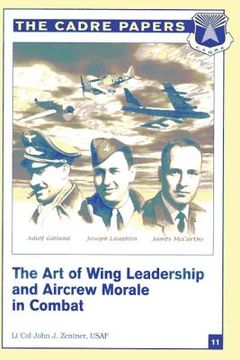
Lt. Col. John J. Zentner's "The Art of Wing Leadership and Aircrew Morale in Combat" addresses the role that the air force wing commander plays in affecting the level of aircrew morale during combat. More specifically, Colonel Zentner's study seeks to identify and define those unique characteristics associated with leading airmen that sustain aircrew moral in the face of significant losses. Colonel Zentner defines aircrew morale as the enthusiasm and persistence with which an aviator flies combat missions. He then offers three historical case studies to establish a framework within which aircrew morale can be assessed. The first case study is of Maj. Adolf Galland and Jagdgeschwader 26 during the Battle of Britain. The second case study considers Lt. Col. Joseph Laughlin and the 362d Fighter Group during the invasion of France in the summer of 1944. The third case study examines Col. James R. McCarthy and the 43d Strategic Wing during Operation Linebacker II. Drawing heavily on the results of questionnaires and personal interviews, each case study is focused on the importance that aircrews ascribed to three general areas: individual needs, group cohesion, and unit esprit de corps. Colonel Zentner concludes that aircrew control over development of combat tactics was the single most important element affecting morale. This finding supports one of the fundamental truths about the employment of airpower, centralized control and decentralized execution, that has become embedded in the airman's culture. In each of the three cases studied by the author, morale generally improved when the wing commander either displayed a personal flair for tactical innovation or allowed his subordinates to become innovative. Conversely, morale declined when higher headquarters placed burdensome and unsound restrictions on aircrew tactics. In light of the restrictive rules of engagement that have governed recent application of American airpower, Colonel Zentner recommends the USAF take steps to modify doctrine and professional military education in order to relate the findings of this study to the combat air forces.

Customers reviews

Frequently Asked Questions about the Book

All books in our catalog are Original.
The book is written in English.
The binding of this edition is Paperback.

Questions and Answers about the Book

Do you have a question about the book? Login to be able to add your own question.

Opinions about Bookdelivery

More customer reviews