Hallo! Tracked shipping to Netherlands with Delivery Duty Paid for just €7 

Ship to
Netherlands
0
  • argentina
  • chile
  • colombia
  • españa
  • méxico
  • perú
  • estados unidos
  • internacional

Select your country

Americas

Europe

Rest of the world

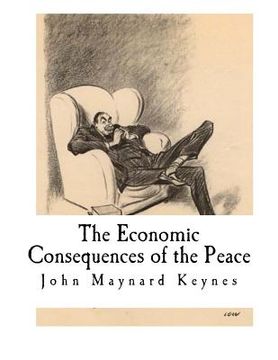
portada The Economic Consequences of the Peace
Type
Physical Book
Publisher
Language
English
Pages
104
Format
Paperback
Dimensions
28.0 x 21.6 x 0.6 cm
Weight
0.26 kg.
ISBN13
9781537266350

The Economic Consequences of the Peace

John Maynard Keynes (Author) · Createspace · Paperback

The Economic Consequences of the Peace - John Maynard Keynes

New Book Imported to Netherlands
Delivery: 04 Sep - 11 Sep Shipping: 16 to 20 business days.
€ 17,73
Import costs and 9% BTW included in the price ✅
€ 17,73

Synopsis "The Economic Consequences of the Peace"

The Economic Consequences of the Peace by John Maynard Keynes... The Economic Consequences of the Peace (1919) is a book written and published by John Maynard Keynes. The book was released in late 1919 and became an immediate bestseller on both sides of the Atlantic: it was released in the US in 1920. The scathing sketches of Wilson, Lloyd George and Clemenceau proved to be very popular and the work established Keynes' reputation with the public as a leading economist. In six months, the book had sold 100,000 copies with translations into 12 languages. It restored Keynes' reputation with the Bloomsbury Group, which had been tarnished by his work for the Treasury during the war. Keynes returned to Cambridge to work as an economist, where he was regarded as the leading student of Alfred Marshall. Keynes left Cambridge University to work at the Treasury in 1915. He worked daily on financing the war effort during World War I. That disturbed many of the pacifist members of the Bloomsbury Group of which he was a member. Lytton Strachey sent him a note in 1916 asking Keynes why he was still working at the Treasury. Keynes quickly established a reputation as one of the Treasury's most able men and travelled to the Versailles Conference as an advisor to the British Government. In preparation for the conference, he argued that there should preferably be no reparations or that German reparations should be limited to
John Maynard Keynes
  (Author)
View Author's Page
John Maynard Keynes (Cambridge, 1883 – Sussex, 1946) was an influential British economist whose ideas radically transformed the theory and economic policy of the 20th century. Educated at Eton and the University of Cambridge, he was a member of the Bloomsbury Group and had a distinguished career as a civil servant, academic, and advisor to the British government. His macroeconomic theory laid the foundations for what would later be known as Keynesian economics, advocating state intervention to stabilize the economic cycle.

Among his most recognized works are The Economic Consequences of the Peace (1919), A Revision of the Treaty (1922), A Treatise on Money (1930), and The General Theory of Employment, Interest, and Money (1936), the latter considered his magnum opus. Although he did not receive formal awards in his lifetime, his legacy is immense and his influence has endured in the economic policy of numerous countries, especially after the Great Depression and World War II.
See more
See less

Customers reviews

Frequently Asked Questions about the Book

All books in our catalog are Original.
The book is written in English.
The binding of this edition is Paperback.

Questions and Answers about the Book

Do you have a question about the book? Login to be able to add your own question.

Opinions about Bookdelivery

More customer reviews