Ship to
Netherlands
0
  • argentina
  • chile
  • colombia
  • españa
  • méxico
  • perú
  • estados unidos
  • internacional

Select your country

Americas

Europe

Rest of the world

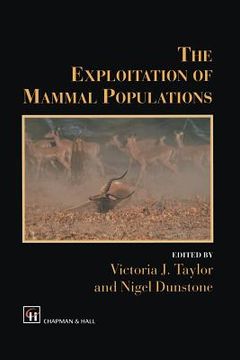
portada the exploitation of mammal populations
Type
Physical Book
Publisher
Year
2011
Language
English
Pages
415
Format
Paperback
Dimensions
23.1 x 15.6 x 2.5 cm
Weight
0.62 kg.
ISBN
9401071829
ISBN13
9789401071826

the exploitation of mammal populations

V. J. Taylor (Illustrated by) · N. Dunstone (Illustrated by) · Springer · Paperback

the exploitation of mammal populations - Taylor, V. J. ; Dunstone, N.

Cheaper New Book Imported to Netherlands
Delivery: 18 Aug - 25 Aug Shipping: 12 to 16 business days.
148,57 €
Faster New Book Imported to Netherlands
Delivery: 06 Aug - 10 Aug Shipping: 4 to 5 business days.
193,44 €
Import costs and 9% BTW included in the price ✅
148,57 €

Synopsis "the exploitation of mammal populations"

Human exploitation of other mammals has passed through three histori- cal phases, distinct in their ecological significance though overlapping in time. Initially, Homo sapiens was a predator, particularly of herbivores but also of fur-bearing predators. From about 11 000 years ago, goats and sheep were domesticated in the Middle East, rapidly replacing gazelles and other game as the principal source of meat. The principal crops, including wheat and barley, were taken into agriculture at about the same time, and the resulting Neolithic farming culture spread slowly from there over the subsequent 10 500 years. In a few places such as Mexico, Peru and China, this Middle Eastern culture met and merged with agricultural traditions that had made a similar but independent transition. These agricultural traditions provided the essential support for the industrial revolution, and for a third phase of industrial exploita- tion of mammals. In this chapter, these themes are drawn out and their ecological signifi- cance is investigated. Some of the impacts of humans on other mammals require consideration on a world-wide basis, but the chapter concen- trates, parochially, on Great Britain. What have been the ecological consequences of our exploitation of other mammals? 2. 2 HISTORICAL PHASES OF EXPLOITATION 2. 2. 1 Predatory man Our nearest relatives - chimpanzees, orang utans and gorillas - are essentially forest species, deriving most of their diet from the fruits of forest trees and the shoots and leaves of plants.

Customers reviews

Frequently Asked Questions about the Book

All books in our catalog are Original.
The book is written in English.
The binding of this edition is Paperback.

Questions and Answers about the Book

Do you have a question about the book? Login to be able to add your own question.

Opinions about Bookdelivery

More customer reviews