Hallo! Tracked shipping to Netherlands with Delivery Duty Paid for just €7 

Ship to
Netherlands
0
  • argentina
  • chile
  • colombia
  • españa
  • méxico
  • perú
  • estados unidos
  • internacional

Select your country

Americas

Europe

Rest of the world

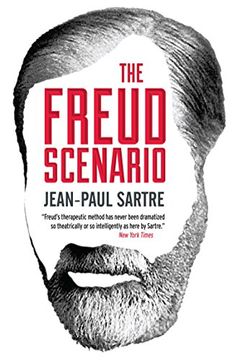
portada The Freud Scenario
Type
Physical Book
Translated by
Publisher
Year
2013
Language
English
Pages
576
Format
Paperback
Dimensions
23.1x15.2x3.3 cm
Weight
0.77 kg.
ISBN
1844677729
ISBN13
9781844677726

The Freud Scenario

Jean-Paul Sartre (Author) · Quintin Hoare (Translated by) · Verso · Paperback

The Freud Scenario - Jean-Paul Sartre

New Book Imported to Netherlands
Delivery: 02 Nov - 09 Nov Shipping: 16 to 20 business days.
€ 35,82
Import costs and 9% BTW included in the price ✅
€ 35,82

Synopsis "The Freud Scenario"

In 1958, the US director John Huston asked Jean-Paul Sartre to write a scenario for a film about Sigmund Freud. Huston wanted Sartre to concentrate on the conflict-ridden period of Freud's life when he abandoned hypnosis and invented psychoanalysis. The Freud Scenario, discovered in Sartre's papers after his death, is the result--a deft portrait of a man engaged in a personal and intellectual struggle that would prove a turning point in twentieth-century thought. Sartre did not regard this script as a diversion from his larger intellectual project. Freud's preoccupations with female hysteria and the father relationship touched on major themes in his own work, and Loser Wins, The Family Idiot and Words, some of Sartre's most celebrated publications, are all in some way derived from his work for Huston. Written for a Hollywood audience, The Freud Scenario demonstrates that, in addition to a towering intellect, Sartre enjoyed a genuine popular touch. Already widely acclaimed in France, The Freud Scenario stands as a valuable testament to two of the most influential minds in modern history.
Jean-Paul Sartre
  (Author)
View Author's Page
Jean-Paul Sartre (Paris, June 21, 1905 – April 15, 1980) was a French philosopher, novelist, playwright, and political activist, considered the main representative of existentialism and a key figure in twentieth-century thought. He studied at the École Normale Supérieure, where he met Simone de Beauvoir, his lifelong intellectual and romantic partner.

His most influential philosophical work, Being and Nothingness (1943), develops an ontology based on the radical freedom of human beings, proposing that “existence precedes essence,” meaning we are not predetermined and must construct ourselves through our choices. In literature, he stood out with Nausea (1938) and the play No Exit (1944), where he addressed the absurdity of existence and human relationships.

Sartre was also a committed political activist: he participated in the French Resistance during World War II, supported decolonization movements, and was critical of capitalism and totalitarianism. In 1964, he declined the Nobel Prize in Literature, believing that a writer should not be institutionalized.

He died in 1980, leaving a philosophical and literary legacy that continues to influence ethics, politics, and existential theory.
See more
See less

Customers reviews

Frequently Asked Questions about the Book

All books in our catalog are Original.
The book is written in English.
The binding of this edition is Paperback.

Questions and Answers about the Book

Do you have a question about the book? Login to be able to add your own question.

Opinions about Bookdelivery

More customer reviews