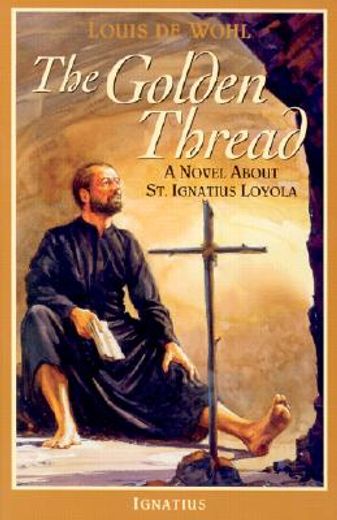
As in his other popular novels, Louis de Wohl, with humility and deep religious conviction, takes us into the mind and heart of a saint, giving at the same time an enthralling picture of the era in which he lived.Here is a skillful weaving of the story of St. Ignatius Loyola's conversion and pilgrimage with the colorful and dangerous history of Spain and Italy in the early sixteenth century. The life of the very human, very great Basque nobleman who founded the Jesuit Order, makes for one of de Wohl's finest novels.Seriously wounded at the siege of Pamplona in 1521, Don Inigo de Loyola learned that to be a Knight of God was an infinitely greater honor (and infinitely more dangerous) than to be a Knight in the forces of the Emperor. Uli von der Flue, humorous, intelligent and courageous Swiss mercenary, was responsible for the canon shot which incapacitated the worldly and ambitious young nobleman, and Uli became deeply involved in Loyola's life. With Juanita, disguised as the boy Juan, Uli followed Loyola on a pilgrimage to the Holy Land to protect him, but it was the saint who protected Uli and Juan. Through Uli's eyes we see the surge and violence of the turbulent period in Jerusalem, Spain and Rome.Louis de Wohl has again created an exciting and spiritually inspiring novel for all readers of historical fiction.
Louis de Wohl (nacido Lajos Theodor Gaspar Adolf Wohl el 24 de enero de 1903 en Berlín y fallecido el 2 de junio de 1961 en Lucerna, Suiza) fue un prolífico escritor, guionista y astrólogo con una vida tan diversa como las historias que escribió.
De Wohl creció en una familia católica de origen húngaro y austríaco en la Alemania de entreguerras. Comenzó a escribir desde muy joven y sus primeras obras fueron novelas de aventuras, policiales y de entretenimiento, algunas de las cuales fueron adaptadas al cine alemán antes de la Segunda Guerra Mundial.
En 1935, ante el ascenso del nazismo y debido a su origen familiar, emigró a Inglaterra, donde adoptó el nombre de Louis de Wohl. Durante la guerra trabajó para el Servicio de Inteligencia Británico (MI5/SOE) como astrología de guerra psicológica, elaborando horóscopos y propaganda destinada a influir en la percepción pública y a desinformar al enemigo.
Tras la contienda, se asentó en Suiza y se dedicó casi exclusivamente a escribir novelas históricas centradas en santos y personajes clave de la historia de la Iglesia Católica. Sus libros, caracterizados por una narrativa accesible y un marcado enfoque religioso, han sido traducidos a múltiples idiomas y han vendido millones de copias en todo el mundo.
Entre sus títulos más conocidos están obras sobre San Francisco de Asís, Santo Tomás de Aquino, San Ignacio de Loyola y muchos otros. Su trabajo combinó su profundo interés por la fe católica con una habilidad sobresaliente para recrear épocas históricas