Hallo! Tracked shipping to Netherlands with Delivery Duty Paid for just €7 

Ship to
Netherlands
0
  • argentina
  • chile
  • colombia
  • españa
  • méxico
  • perú
  • estados unidos
  • internacional

Select your country

Americas

Europe

Rest of the world

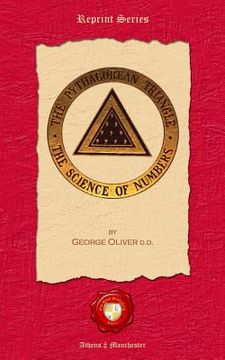
portada The Pythagorean Triangle
Type
Physical Book
Language
English
Pages
276
Format
Paperback
Dimensions
20.3x12.7x1.6 cm
Weight
0.30 kg.
ISBN13
9781781071427

The Pythagorean Triangle

George Oliver D. D. (Author) · Old Book Publishing Ltd · Paperback

The Pythagorean Triangle - Oliver D. D., George

New Book Imported to Netherlands
Delivery: 15 Sep - 22 Sep Shipping: 16 to 20 business days.
€ 34,81
Import costs and 9% BTW included in the price ✅
€ 34,81

Synopsis "The Pythagorean Triangle"

A large portion of the Egyptian philosophy and religion seems to have been constructed almost wholly upon the science of numbers; and we are assured by Kircher that everything in nature was explained on this principle alone. The Pythagoreans had so high an opinion of it, that they considered it to be the origin of all things, and thought knowledge of numbers to be equivalent to knowledge of God. The founder of the sect received his instructions in this science from the Egyptian priests; who taught him that, while the monad possesses the nature of the efficient cause, the dyad is merely a passive matter. A point corresponds with the monad, both being indivisible; and as the monad is the principle of numbers, so is the point of lines. A line corresponds with the dyad, both being considered by transition. In expressing their opinion of the Regular or Platonic bodies, the followers of Pythagoras argued that the world was made by God "in thought, and not in time;" and that He commenced His work in fire and the fifth element; for there are five figures of solid bodies which are termed mathematical. Earth was made of a cube, Fire of a pyramid, Air of an octahedron, Water of an icosahedrons, the Sphere of the Universe of a Dodecahedron. And the combinations of the monad, as the principle of all things, are thus deduced. From the monad came the indeterminate dyad; from them came numbers; from numbers, points; from points lines; from lines, superficies; from superficies, solids; from these, solid bodies whose elements are four, viz., fire, water, air, earth; of all of which, under various transmutations, the world consists.

Customers reviews

Frequently Asked Questions about the Book

All books in our catalog are Original.
The book is written in English.
The binding of this edition is Paperback.

Questions and Answers about the Book

Do you have a question about the book? Login to be able to add your own question.

Opinions about Bookdelivery

More customer reviews