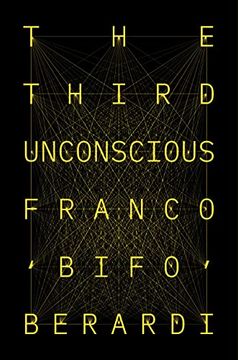
A wide-ranging exploration of the present, and the future, of the Unconcious The Unconscious knows no time, it has no before-and-after, it does not have a history of its own. Yet, it does not always remain the same. Different political and economic conditions transform the way in which the Unconscious emerges within the "psychosphere" of society. In the early 20th century, Freud characterized the Unconscious as the dark side of the well-order framework of Progress and Reason. At the end of the past century, Deleuze and Guattari described it as a laboratory: the magmatic force ceaselessly bringing to the fore new possibilities of imagination. Today, at a time of viral pandemics and in the midst of the catastrophic collapse of capitalism, the Unconscious has begun to emerge in yet another form. In this book, Franco 'Bifo' Berardi vividly portraits the form in which the Unconscious will make itself manifest for decades to come, and the challenges that it will pose to our possibilities of political action, poetic imagination, and therapy.
Franco “Bifo” Berardi (nacido en Bolonia en 1949) es un filósofo, escritor y agitador cultural italiano muy influyente dentro del movimiento autonomista. Se formó en estética en la Universidad de Bolonia y participó activamente en el movimiento estudiantil de 1968. Durante los años 70, fue fundador de la revista A/Traverso y cofundador de Radio Alice, la primera emisora pirata de Italia, clave en el activismo mediático de la época. También fue parte del grupo Potere Operaio y vivió en París tras ser perseguido durante la represión estatal, donde encontró influencias intelectuales de Félix Guattari. Más adelante, pasó tiempo en ciudades como Nueva York y San Francisco.
Hoy enseña historia social de la comunicación en la Academia de Bellas Artes de Brera, en Milán, y ha sido pionero en movimientos como TV Orfeo, la primera televisión comunitaria italiana. Como ensayista, ha publicado decenas de libros en diversos idiomas, abordando temas como el trabajo, la comunicación, la alienación, la psicopolítica y los efectos del capitalismo posindustrial.
Es autor de obras destacadas como La fábrica de la infelicidad, Generación post-alfa, Fenomenología del fin, La sublevación, El umbral y La segunda venida, entre muchas otras. Su pensamiento combina crítica cultural, análisis del trabajo y propuestas poéticas y subjetivas para enfrentar el semiocapitalismo moderno.