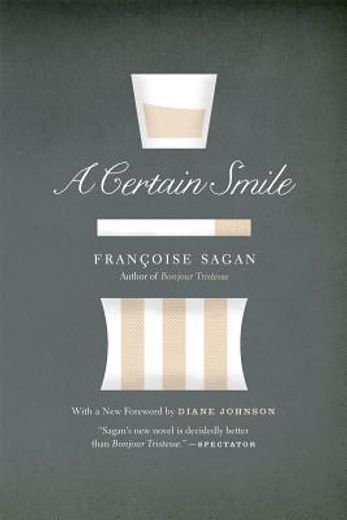
Françoise Sagan is best known for her first novel, Bonjour Tristesse, which caused a scandal when she first published it at the age of eighteen in 1953. But her second novel, A Certain Smile, less shocking and more psychologically convincing, was preferred by many critics. Like Bonjour Tristesse, this story is set in Paris in the 1950s and told by a young student bored by her law books, restless and curious about love and sex. She is fond of her loyal boyfriend, but he, too, bores her. His worldly uncle strikes her as more exciting, appealingly risky and forbidden. Frank and spontaneous, vulnerable and cruel, thoughtless and insightful, Sagan's young narrator explores such perennial themes as unrequited love and the precarious balance of irrational emotions and self-restraint.This edition includes a new foreword by Diane Johnson, author of the best-selling novels Le Divorce and L'Affaire. "The second book is now out, and so is the verdict. Sagan's novel Un Certain Sourire, written in two months, is the new literary sensation of Paris."--Time "Miss Sagan is a technician of the highest order, working with exceptional economy and elegance in the tradition of Colette and Benjamin Constant."--Atlantic "The reader is given the feeling of having opened a young girl's intimate diary by mistake. But whoever put such a diary down?--especially when the author is as sensitive, experienced, gifted and freshly talented as Mlle. Sagan!"--San Francisco Examiner "[Sagan's] style is honest, direct, and her dialogue true. But for her sake let's hold back those invidious comparisons. Colette indeed! She might turn out to be Sagan."--Saturday Review
Françoise Sagan fue una escritora francesa reconocida por su estilo elegante y su retrato de las emociones humanas, especialmente en la juventud y las relaciones amorosas. Nació en 1935 en Cajarc, Francia, bajo el nombre de Françoise Quoirez. Desde muy joven mostró una gran pasión por la literatura y la escritura, lo que la llevó a publicar su primera novela, “Bonjour Tristesse”, a los 18 años. Esta obra, que exploraba temas de amor, libertad y melancolía, tuvo un éxito inmediato y la convirtió en una figura emblemática de la literatura francesa de posguerra.
A lo largo de su carrera, Sagan escribió numerosas novelas, obras de teatro y guiones, siempre con un enfoque en las complejidades del corazón humano y la fragilidad de las relaciones. Su estilo se caracteriza por su lenguaje sencillo pero profundo, capaz de capturar con sutileza las contradicciones y emociones de sus personajes.
Además de su faceta literaria, Françoise Sagan fue conocida por su vida personal intensa y a veces polémica, que incluyó relaciones turbulentas y una lucha abierta contra las convenciones sociales de su tiempo.
Falleció en 2004, dejando un legado literario que sigue siendo valorado por su honestidad emocional y su mirada crítica sobre la sociedad y el amor.