Hallo! Tracked shipping to Netherlands with Delivery Duty Paid for just €7 

Ship to
Netherlands
0
  • argentina
  • chile
  • colombia
  • españa
  • méxico
  • perú
  • estados unidos
  • internacional

Select your country

Americas

Europe

Rest of the world

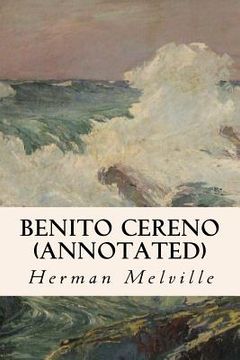
portada Benito Cereno (annotated)
Type
Physical Book
Publisher
Language
English
Pages
122
Format
Paperback
Dimensions
22.9 x 15.2 x 0.7 cm
Weight
0.17 kg.
ISBN13
9781530922529

Benito Cereno (annotated)

Herman Melville (Author) · Createspace · Paperback

Benito Cereno (annotated) - Melville, Herman

New Book Imported to Netherlands
Delivery: 07 Sep - 10 Sep Shipping: 14 to 16 business days.
€ 14,31
Import costs and 9% BTW included in the price ✅
€ 14,31

Synopsis "Benito Cereno (annotated)"

'Benito Cereno' is a novella by Herman Melville, a fictionalized account about the revolt on a Spanish slave ship captained by Don Benito Cereno, first published in three installments in Putnam's Monthly in 1855. The tale, slightly revised, was included in his short story collection The Piazza Tales that appeared in May 1856. According to scholar Merton M. Sealts, Jr., the story is 'an oblique comment on those prevailing attitudes toward blacks and slavery in the United States that would ultimately precipitate civil war between North and South.' The famous question of what had cast such a shadow upon Cereno was used by American author Ralph Ellison as an epigraph to his 1952 novel Invisible Man, excluding Cereno's answer, "The negro." Over time, Melville's story has been "increasingly recognized as among his greatest achievements." In 1799 off the coast of Chile, captain Amasa Delano of the American sealer and merchant ship Bachelor's Delight visits the San Dominick, a Spanish slave ship apparently in distress. After learning from its captain Benito Cereno that a storm has taken many crewmembers and provisions, Delano offers to help out. He notices that Cereno acts awkwardly passive for a captain and the slaves display remarkably inappropriate behavior, and though this piques his suspicion he ultimately decides he is being paranoid. When he leaves the San Dominick and captain Cereno jumps after him, he finally discovers that the slaves have taken command of the ship, and forced the surviving crew to act as usual. Employing a third-person narrator who reports Delano's point of view without any correction, the story has become a famous example of unreliable narration. Much critical study has gone into the story's relation to the Toussaint Louverture-led slave rebellion of the 1790s in Saint-Domingue, as well as to Melville's use of one chapter from the historical Amasa Delano's Voyages of 1817, a source of such importance that "he must have written 'Benito Cereno' with Chapter 18 constantly open before him."[3] The novella's "unreliable, even deceptive, narration" continues to cause misunderstanding.[4] Many reviewers of The Piazza Tales cited the novella as one of the highlights in the collection. Melville biographer Hershel Parker calls it "an intensely controlled work, formally one of the most nearly perfect things Melville ever did."
Herman Melville
  (Author)
View Author's Page
Herman Melville (New York, August 1, 1819-New York, September 28, 1891)1 was an American writer, novelist, poet, and essayist from the American Renaissance period. Among his most famous novels are Typee (1846), based on his experiences in Polynesia, and the novel Moby Dick (1851),1 considered his masterpiece and a classic of world literature

Between 1853 and 1855, he published a series of stories in Putnam Magazine, most of which were collected in The Piazza Tales, including two of Melville's most important narratives: the story Bartleby, the Scrivener and the novella Benito Cereno. Also featured is the story The Encantadas, consisting of ten sketches about the Galapagos Islands linked by a single narrator. In 1857, The Confidence-Man: His Masquerade, also known as The Confidence-Man, was the last prose fiction work he published. Seeking financial stability, he abandoned writing, accepting a position as a customs inspector

In his later years, in which he also had to endure the death of two of his brothers as well as the death of two of his sons, Clarence, from tuberculosis, and Malcolm from a possible suicide, as well as the death of another of his sons at thirty-five years old, Stanwix Melville, he dedicated himself to writing poetry. Battle-Pieces and Aspects of the War, from 1866, is a poetic reflection on the Civil War and Clarel: A Poem and Pilgrimage in the Holy Land, a fictional epic poem, published in 1876. The novel Billy Budd, which he left unfinished and was posthumously published in London in 1924, is considered one of the most significant works of American literature.
See more
See less

Customers reviews

Frequently Asked Questions about the Book

All books in our catalog are Original.
The book is written in English.
The binding of this edition is Paperback.

Questions and Answers about the Book

Do you have a question about the book? Login to be able to add your own question.

Opinions about Bookdelivery

More customer reviews