Hallo! Tracked shipping to Netherlands with Delivery Duty Paid for just €7 

Ship to
Netherlands
0
  • argentina
  • chile
  • colombia
  • españa
  • méxico
  • perú
  • estados unidos
  • internacional

Select your country

Americas

Europe

Rest of the world

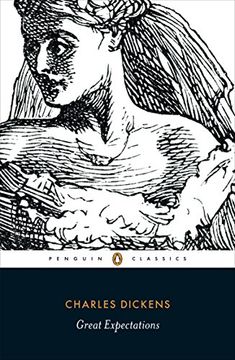
portada Great Expectations
Type
Physical Book
Introduction by
Illustrated by
Publisher
Year
2002
Language
English
Pages
544
Format
Paperback
Dimensions
19.5 x 12.9 x 2.3 cm
Weight
0.36 kg.
ISBN
0141439564
ISBN13
9780141439563
Edition No.
1

Great Expectations

Charles Dickens (Author) · David Trotter (Introduction by) · Charlotte Mitchell (Illustrated by) · Penguin · Paperback

Great Expectations - Charles Dickens

Cheaper New Book Imported to Netherlands
Delivery: 10 Sep - 14 Sep Shipping: 18 to 19 business days.
€ 11,90
Faster New Book Imported to Netherlands
Delivery: 18 Aug - 19 Aug Shipping: 2 to 2 business days.
€ 12,78
Import costs and 9% BTW included in the price ✅
€ 11,90

Synopsis "Great Expectations "

'Great Expectations is up there for me with the world's greatest novels' Howard Jacobson. Nominated as one of America's best-loved novels by PBS's The Great American Read Charles Dickens's Great Expectations charts the course of orphan Pip Pirrip's life as it is transformed by a vast, mysterious inheritance. A terrifying encounter with the escaped convict Abel Magwitch in a graveyard on the wild Kent marshes; a summons to meet the bitter, decrepit Miss Havisham and her beautiful, cold-hearted ward Estella at Satis House; the sudden generosity of a mysterious benefactor - these form a series of events that change the orphaned Pip's life forever, and he eagerly abandons his humble station as an apprentice to blacksmith Joe Gargery, beginning a new life as a gentleman. Charles Dickens's haunting late novel depicts Pip's education and development through adversity as he discovers the true nature of his identity, and his 'great expectations'. This definitive version uses the text from the first published edition of 1861. It includes a map of Kent in the early nineteenth century, and appendices on Dickens's original ending and his working notes, giving readers an illuminating glimpse into the mind of a great novelist at work. For more than seventy years, Penguin has been the leading publisher of classic literature in the English-speaking world. With more than 1,700 titles, Penguin Classics represents a global bookshelf of the best works throughout history and across genres and disciplines. Readers trust the series to provide authoritative texts enhanced by introductions and notes by distinguished scholars and contemporary authors, as well as up-to-date translations by award-winning translators.
Charles Dickens
  (Author)
View Author's Page
Charles Dickens (February 7, 1812 - June 9, 1870) was born in Portsmouth and was the eldest son of a Royal Navy clerk. At twelve, his father's imprisonment for debt forced him to work in a blacking factory. His education was sporadic: he taught himself shorthand, worked as a clerk in a law office, and eventually became a parliamentary correspondent for the Morning Chronicle.

Coming from a humble family, "good old Charles" did not receive formal education until he was nine, and was heavily criticized by the critics of the time for being too self-taught. His life took an unexpected turn with his father's imprisonment for debts, moving his family to live with him in jail, allowed at that time by British laws. At the age of 12, he was already considered fit to start working in a dye factory. Although his family's situation had improved, his mother insisted he keep working there, inspiring him to write one of his masterpieces, David Copperfield.

His articles, later collected in Scenes from London Life by "Boz" (1836-1837), were very successful, and with the appearance in 1837 of The Posthumous Papers of the Pickwick Club, Dickens became a true publishing phenomenon. Novels such as Oliver Twist (1837-1839), Nicholas Nickleby (1838-1839), and Barnaby Rudge (1841) gained enormous popularity, as did some travel chronicles, such as Pictures from Italy (1846). With Dombey and Son (1846-1848) he began his mature period, of which good examples are David Copperfield (1849-1850), his first novel in the first person and his favorite, in which he developed some autobiographical episodes; Bleak House (1852-1853); Little Dorrit (1855-1857), A Tale of Two Cities (1859), Great Expectations (1860-1861), and Our Mutual Friend (1864-1865). He died at Gad's Hill, his country house in Higham, in the county of Kent.
See more
See less

Customers reviews

Frequently Asked Questions about the Book

All books in our catalog are Original.
The book is written in English.
The binding of this edition is Paperback.

Questions and Answers about the Book

Do you have a question about the book? Login to be able to add your own question.

Opinions about Bookdelivery

More customer reviews