Hallo! Tracked shipping to Netherlands with Delivery Duty Paid for just €7 

Ship to
Netherlands
0
  • argentina
  • chile
  • colombia
  • españa
  • méxico
  • perú
  • estados unidos
  • internacional

Select your country

Americas

Europe

Rest of the world

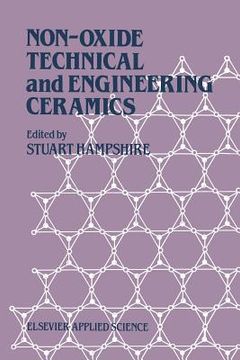
portada Non-Oxide Technical and Engineering Ceramics
Type
Physical Book
Publisher
Language
English
Pages
458
Format
Paperback
Dimensions
22.9x15.2x2.4 cm
Weight
0.64 kg.
ISBN13
9789401080316

Non-Oxide Technical and Engineering Ceramics

Hampshire, S. (Author) · Springer · Paperback

Non-Oxide Technical and Engineering Ceramics - Hampshire, S.

Cheaper New Book Imported to Netherlands
Delivery: 22 Sep - 29 Sep Shipping: 12 to 16 business days.
€ 97,78
Faster New Book Imported to Netherlands
Delivery: 10 Sep - 14 Sep Shipping: 4 to 5 business days.
€ 134,50
Import costs and 9% BTW included in the price ✅
€ 97,78

Synopsis "Non-Oxide Technical and Engineering Ceramics"

Conferences on technical and engineering ceramics are held with increasing frequency, having become fashionable because the potential of ceramics in profitable growth industries is an urgent matter of considerable debate and discussion. Japanese predictions are that the market value of ceramics will grow 10 at about 10% per annum to reach at least $10 by the end of the century. Seventy per cent of this market will be in electroceramics, applications for which include insulating substrates in integrated circuits, ferroelectric capacitors, piezoelectric oscillators and transdu- cers, ferrite magnets, and ion-conducting solid electrolytes and sen- sors. All these are oxides, and so are excluded by the title of the Limerick Conference. Why 'Non-oxide'? The other major ceramics potential is in struc- tural engineering components and engine applications. Here, the greatest impetus to research and development has been the attempt to produce a ceramic gas turbine. Heat engines become more efficient as their working temperature increases, but nickel-base superalloy en- gines have about reached their limit. Compared with metals, ceramics have higher strengths at high temperatures, better oxidation and corrosion resistance, and are also less dense. In general, ceramics have better properties above about 1000 C except in one respect-their inherent brittleness. The work of fracture is therefore much smaller than for metals and so the permitted flaw size is also smaller.

Customers reviews

Frequently Asked Questions about the Book

All books in our catalog are Original.
The book is written in English.
The binding of this edition is Paperback.

Questions and Answers about the Book

Do you have a question about the book? Login to be able to add your own question.

Opinions about Bookdelivery

More customer reviews