Hallo! Tracked shipping to Netherlands with Delivery Duty Paid for just €7 

Ship to
Netherlands
0
  • argentina
  • chile
  • colombia
  • españa
  • méxico
  • perú
  • estados unidos
  • internacional

Select your country

Americas

Europe

Rest of the world

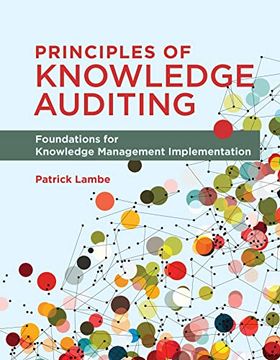
portada Principles of Knowledge Auditing: Foundations for Knowledge Management Implementation
Type
Physical Book
Publisher
Language
English
Pages
424
Format
Paperback
ISBN13
9780262545037

Principles of Knowledge Auditing: Foundations for Knowledge Management Implementation

Patrick Lambe (Author) · The Mit Press · Paperback

Principles of Knowledge Auditing: Foundations for Knowledge Management Implementation - Patrick Lambe

Cheaper New Book Imported to Netherlands
Delivery: 01 Oct - 05 Oct Shipping: 18 to 19 business days.
€ 37,88
Faster New Book Imported to Netherlands
Delivery: 09 Sep - 11 Sep Shipping: 2 to 3 business days.
€ 63,07
Import costs and 9% BTW included in the price ✅
€ 37,88

Synopsis "Principles of Knowledge Auditing: Foundations for Knowledge Management Implementation "

A comprehensive theoretical and practical guide to the operating principles of knowledge auditing, illustrated with numerous case studies. A knowledge audit provides an "at a glance" view of an organization's needs and opportunities. Its purpose is to improve an organization's effectiveness through a better understanding of the dynamics and levers of knowledge production, access, and use. However, this developing field is hampered by the lack of a common language about the origins and nature of knowledge auditing. In Principles of Knowledge Auditing, Patrick Lambe integrates the theory and practices of the field, laying out principles and guidelines for a clearer and more pragmatic approach to knowledge auditing that makes it more accessible to practitioners and researchers. Lambe examines knowledge auditing in the context of the development of communications, information, and knowledge management in the twentieth century. He critiques and clarifies ambiguities in how knowledge audits are approached and described, as well as how the results are conveyed within organizations. He discusses the benefits and risks of knowledge management standards. Knowledge auditors, he says, need a common frame of reference more than they need standards. Standards have their uses, but they provide only markers and sign posts and are poor representations of the richness of the landscape. He concludes with a set of guiding principles for practitioners.

Customers reviews

Frequently Asked Questions about the Book

All books in our catalog are Original.
The book is written in English.
The binding of this edition is Paperback.

Questions and Answers about the Book

Do you have a question about the book? Login to be able to add your own question.

Opinions about Bookdelivery

More customer reviews